
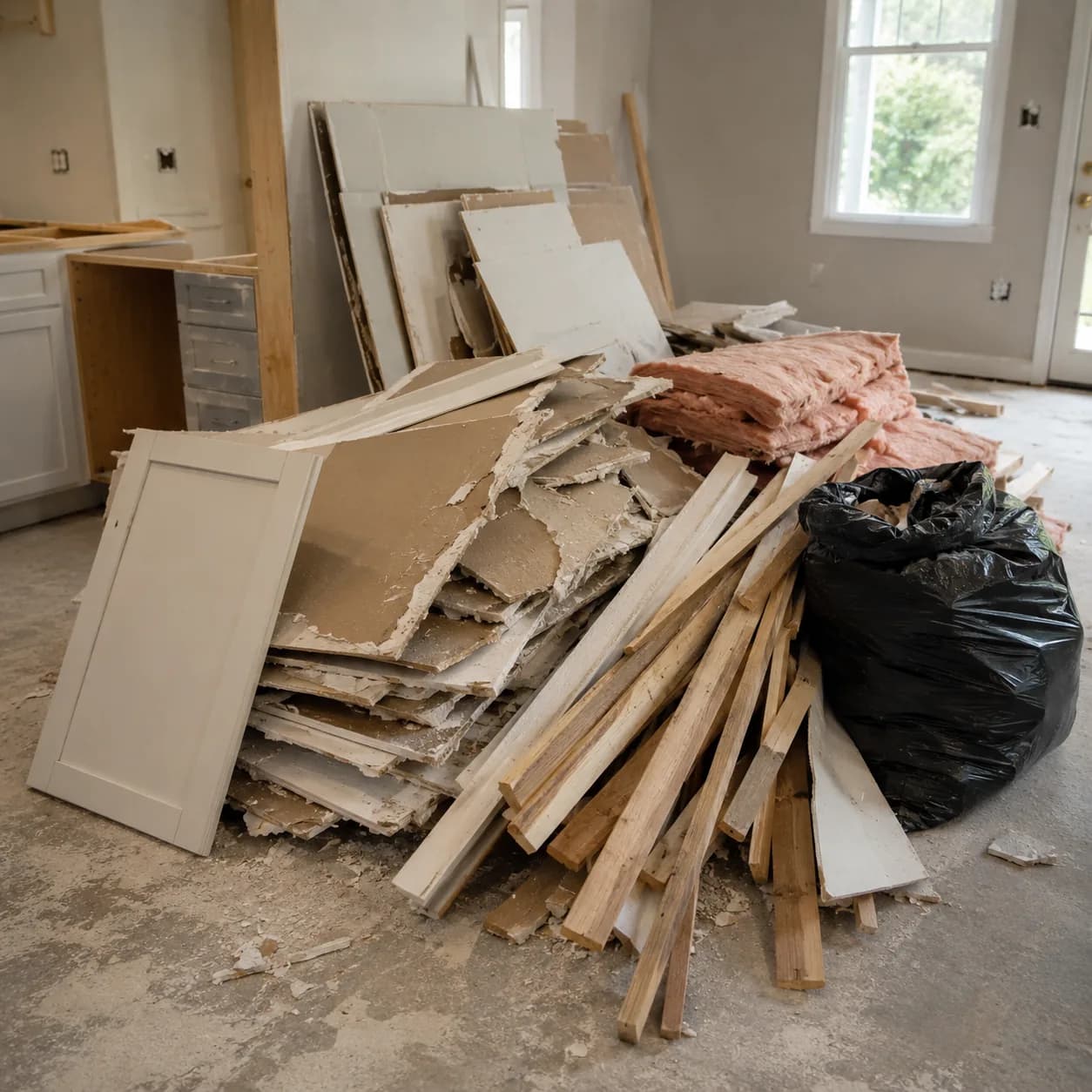
A renovation produces more debris than anyone expects, and most of it cannot go in the household bin. Drywall, tile, plaster, lumber, old cabinets and fixtures pile up fast, and the next trade needs the floor clear.
The most important thing to know before choosing how to get rid of it is that construction debris is heavy, and that changes the price.
Why renovation debris is priced by weight
Drywall, tile, plaster, concrete and roofing are dense. A truck reaches its legal weight limit long before it looks full — a half-loaded truck of demolition debris can already be at capacity.
That is why debris is priced by weight rather than by volume, and why it is worth describing what the pile is made of, not just how big it is, when you ask for a quote.
Option 1: a roll-off dumpster
For a long project producing debris every day, a dumpster lets you load as you go. Check the included weight, because heavy debris can exceed it, and check whether a container on the street needs a permit where you are.
Option 2: on-call haul-away
If debris comes in bursts, if there is nowhere legal to park a container, or if the site needs clearing so the next trade can start, an on-call removal visit fits better. The crew loads it from where it sits and takes it the same visit.
- Drywall, plaster, lumber and framing offcuts
- Flooring, tile, carpet and padding
- Cabinets, countertops, tubs, sinks and toilets
- Doors, windows, trim and old fixtures
- Packaging, pallets and general site clean-up
Separate what can be recycled
Mixed debris has only one destination. Clean, separated material often has others: clean wood, metal, concrete and cardboard all have recycling routes where local facilities accept them.
Keeping these apart as you work makes the load easier to recover, and can make it cheaper to handle.
What renovation debris cannot include
Paint, solvents, adhesives and other chemicals are household hazardous waste and need your county's drop-off program. If you suspect asbestos — in old flooring, ceiling texture or pipe insulation in an older home — stop and have it tested by a qualified professional before disturbing it. It cannot go out as ordinary debris.