
How It Works
What actually happens, start to finish
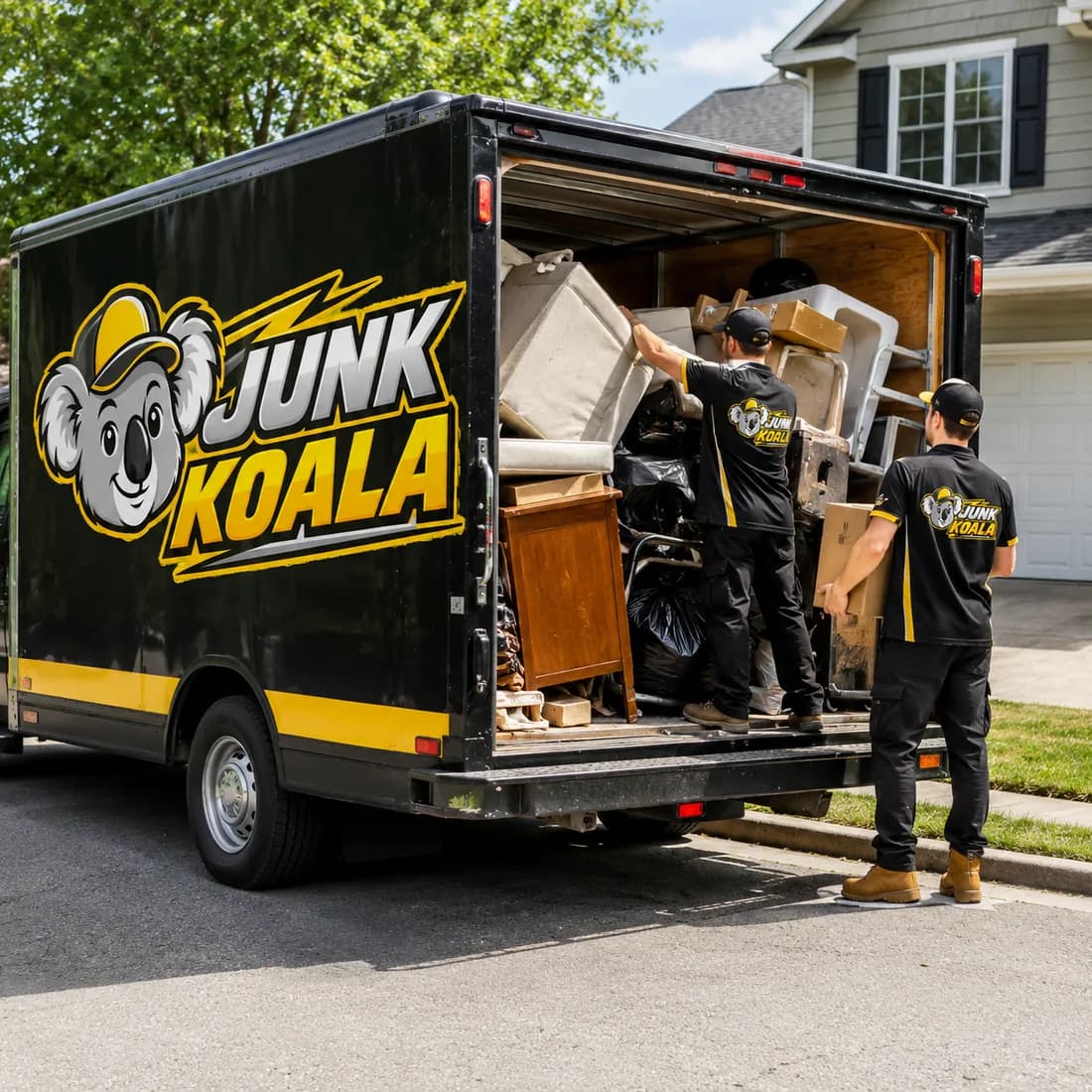
How It Works
Four steps from cluttered to clear
Step 01
Tell Us What Needs to Go
Pick from a list of common items, describe the job in your own words, or send photos — photos are the fastest route to an accurate number, especially for a full room, a garage or anything oversized.
Step 02
Get Your Price
Straightforward jobs can be priced up front. Larger or more variable jobs — cleanouts, construction debris, anything with difficult access — are reviewed and quoted so the number reflects the actual work rather than a guess.
Step 03
Pick Your Time
Select an appointment window that works around your day, including next-day slots where your local crew has capacity left. You will know who is coming and when, and the crew arrives inside the window rather than at the end of it.
Step 04
We Haul It Away
The crew confirms the scope and the price with you before anything is loaded, does the lifting and carrying, sweeps the space, and takes the load to the right destination — donation, recycling or disposal.
On the day
What the appointment looks like

The crew walks the job with you
Before anything moves, you point at what is going. The crew confirms the list, checks the route out and looks for anything that changes the job — stairs, a tight doorway, a refrigerant appliance.
You get the price, then you decide
The number is confirmed on site before loading starts. If the job is bigger than described, you find out then, not on an invoice afterwards.
They do the carrying
Items come out from wherever they are. Furniture gets disassembled when that is the safer way through a doorway, and floors and door casings get protected on the way.
The space gets swept
The crew tidies the area they worked in before leaving, so you get back a usable room rather than an outline in the dust.
The load gets sorted
Donation-quality goods, metal, electronics and green waste are separated on the truck so they reach the right destination rather than all going to the same one.
Before we arrive
Six things that make the job faster
None of these are requirements — the crew handles the job either way. But each one removes time or uncertainty, and on a job priced partly by labor, that matters.
- Separate what you're keeping — it's where most of the time on a job is saved.
- Take photos of anything oversized and send them with your quote request.
- Pull out paint, fuel, propane and chemicals; those go to household hazardous waste.
- Empty drawers and cabinets — furniture leaves with whatever is inside it.
- Tell us about stairs, gates, elevators and where a truck can park.
- Have appliances disconnected from water, gas and hardwired power beforehand.
FAQ
Common questions about the process
What actually happens on the day?
The crew arrives in the appointment window, walks the job with you, and confirms exactly which items are going and what it costs. Once you approve that, they do the removal — carrying items out from wherever they are, loading the truck, and sweeping the space. Then the load goes to donation, recycling or disposal depending on what is in it.
Do I need to move anything to the curb first?
No. The crew removes items from wherever they sit — upstairs bedrooms, basements, attics, back yards, storage units. Moving things outside yourself is optional and does not change the price.
Do I need to be there?
Someone should be present to confirm what is being removed and approve the price before loading starts. If you cannot be there, another adult can walk the job in your place, or you can agree the scope in advance in writing — which is how most real estate and property management jobs are handled.
How long does a job take?
A single item is usually a matter of minutes on site. A garage or a room takes a couple of hours. A full property cleanout can take most of a day, or several days across multiple loads. The variable is rarely the volume — it is how much decision-making happens during the job.
How far ahead should I book?
Next-day slots are usually available, so short notice is rarely a problem. Booking ahead still helps when the job is tied to a fixed date — a closing, a move-out inspection or a lease deadline — because it lets you pick the window rather than take what is left.
Can I get next-day service?
Usually, yes. The calendar shows the windows your local crew genuinely has free, and next-day is often among them. Same-day slots are not currently bookable online — the crew needs the day before to plan the route and the disposal run, so the earliest window offered is the next day. If you need something faster, call us and we will tell you honestly what is possible.
Get started
Ready to get it gone?
Book a pickup or send us the details and we'll come back with a price. Either way, you stop looking at it.
Up to $20 off when you book online — no code needed. It comes off any job priced above your market’s minimum charge; the exact amount is shown before you pay.