Commercial Service
Construction & Renovation Debris Removal
Overview
What construction debris removal covers
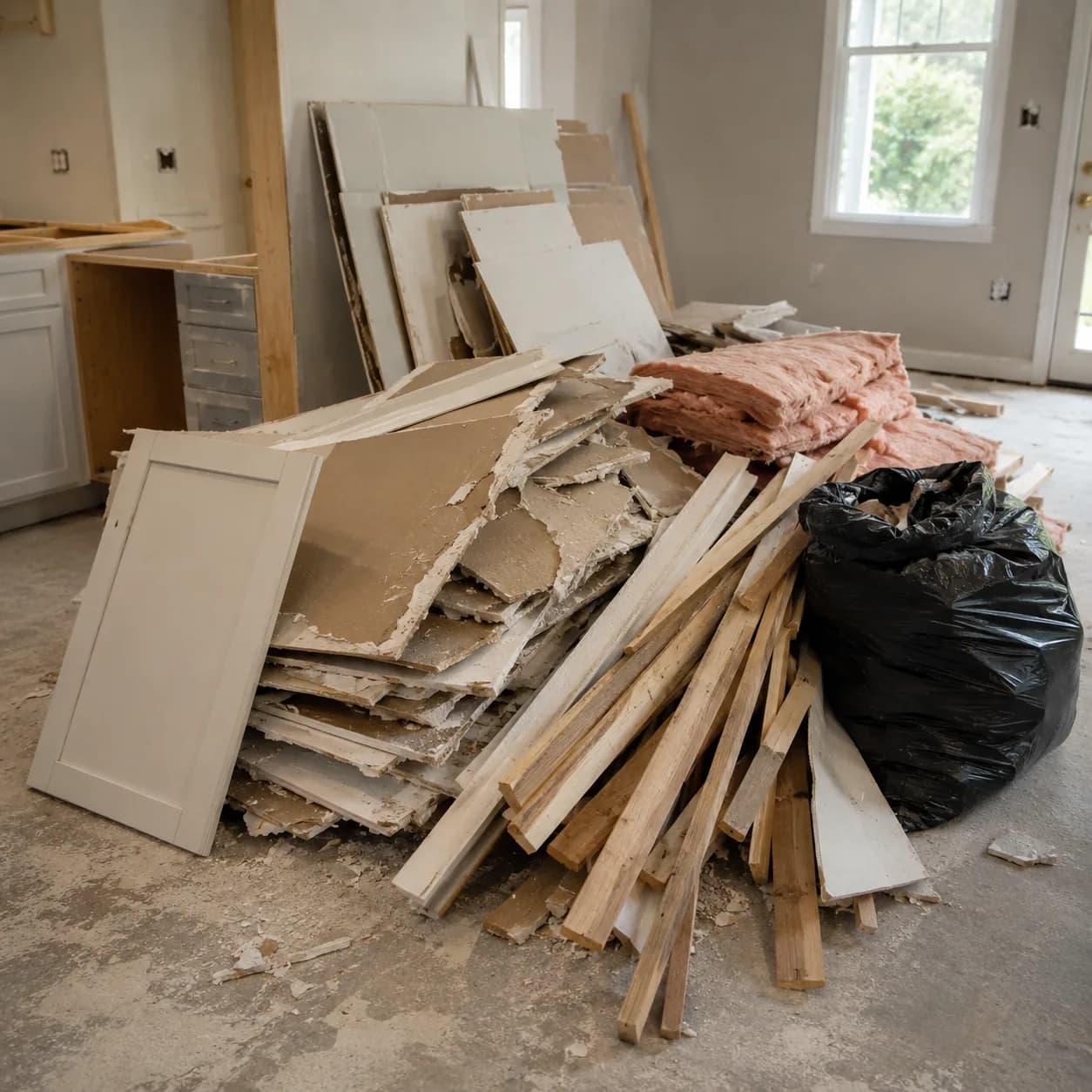
Construction debris is priced differently from everything else in junk removal, because it is priced by weight. Drywall, tile, plaster, concrete and roofing are dense enough that a truck reaches its legal weight limit long before it looks full — a half-loaded truck of demolition debris can be at capacity.
That changes the economics against a roll-off dumpster. A dumpster makes sense for a long project generating continuous debris. On-call removal makes sense when debris comes in bursts, when there is nowhere legal to park a container, when a permit for street placement is not worth the delay, or when a site needs clearing between trades so the next crew can work.
Junk Koala handles renovation and demolition debris for contractors, remodelers and homeowners: drywall, lumber, flooring, cabinets, fixtures, roofing and general site clean-up. Loads are separated for recovery where facilities allow it — clean wood, metal, concrete and cardboard all have recycling routes that mixed debris does not.
Who this is for
- General contractors and remodelers clearing between trades
- Homeowners running their own renovation
- Kitchen and bathroom remodeling specialists
- Flooring, roofing and siding contractors
- Property developers on small-scale projects
- Anyone whose site has no room or permit for a roll-off container
What's included
Debris we remove
Demolition materials
- Drywall and plaster
- Lumber and framing offcuts
- Flooring, tile and underlayment
- Carpet and padding
- Roofing shingles and felt
- Siding, trim and millwork
Fixtures and fittings
- Kitchen and bathroom cabinets
- Countertops, including stone
- Bathtubs, sinks and toilets
- Doors, windows and frames
- Light fixtures and ceiling fans
- Old HVAC ducting and vents
Site clean-up
- Packaging, boxes and banding
- Concrete, brick and masonry rubble
- Scrap metal, conduit and pipe
- Insulation and vapor barrier
- Pallets and delivery waste
- General site sweep-up
Our approach
How Junk Koala handles construction debris
Priced by weight, and scoped honestly
Dense debris hits weight limits before volume limits. Crews quote against what the load will actually weigh, which is why an accurate description of the material matters more than the size of the pile.
On-call between trades
Debris is cleared when it is in the way — after demolition, before drywall, before the finish trades come in — rather than accumulating in a container for weeks.
Separated for recovery where possible
Clean wood, metal, concrete and cardboard have recycling routes that mixed debris does not. Keeping streams separate on site is the single biggest lever on disposal cost.
Regulated materials identified, not removed
Crews are not licensed abatement contractors. Suspected asbestos, lead paint waste and other regulated materials are flagged and left for a licensed specialist rather than loaded.
Site left workable
The point of clearing between trades is that the next crew can start. Areas are swept rather than merely emptied.
Cost & preparation
What moves the price, and how to get ready
What affects the price
- Weight above all — drywall, tile, concrete, plaster and roofing are dense and priced accordingly
- Material type, since clean single-stream loads cost less to dispose of than mixed debris
- Whether the debris is bagged and staged or spread across the site
- Carry distance, floor level and whether there is elevator or dock access
- Concrete, brick and masonry, which usually need a dedicated facility
- Frequency, since ongoing project work is quoted differently from a single clear-out
How to prepare
- Separate materials as you go — clean wood in one pile, metal in another, drywall in a third. It measurably reduces disposal cost.
- Bag loose debris and small material rather than leaving it spread, which speeds loading considerably.
- Never mix hazardous materials into a debris pile. Paint, solvents, adhesives and fuel need separate handling.
- If the building predates 1980, have suspected asbestos and lead assessed before demolition. This is a legal obligation, not a preference, and it must be resolved before removal.
- Keep the debris accessible to where a truck can park, particularly on a site with limited frontage.
FAQ
Construction Debris Removal questions
Is this cheaper than renting a dumpster?
It depends on the project. A dumpster is usually more economical for continuous debris over several weeks. On-call removal wins when debris comes in bursts, when there is nowhere to legally site a container, when street placement needs a permit, or when you only need one or two clear-outs. For a single kitchen demolition, removal is normally the better option.
Do you take concrete and brick?
Yes, but it is priced by weight and usually goes to a dedicated aggregate recycling facility rather than a general transfer station. Even a small volume of concrete is a heavy load, so describe the quantity accurately when you request a quote.
Can you handle asbestos or lead paint debris?
No. Asbestos abatement and lead-safe removal are licensed specialist trades with strict legal requirements. If a building predates 1980 and you are disturbing materials, have them assessed first. Crews will flag suspected material and stop rather than load it.
Can you come back repeatedly during a project?
Yes. On-call removal across a project is common, and recurring work is quoted as a program rather than as a series of unrelated jobs. Tell us the project timeline when you request the quote.
Can you provide diversion documentation?
Where a project requires recycling or diversion records, ask at quote stage so disposal is tracked from the start. Documentation has to be built into the process — it cannot be reconstructed after the loads have gone.
Where we collect
Construction Debris Removal across our open markets
- Dallas, TX
- Fort Worth, TX
- Houston, TX
- Austin, TX
- Phoenix, AZ
- Las Vegas, NV
- Atlanta, GA
- Charlotte, NC
- Nashville, TN
- Orlando, FL
- Tampa, FL
Not listed? Check your ZIP code — it is the answer at your address, whatever the city line says.
Related
Other services people book with this
Commercial Junk Removal
Scheduled removal for offices, retail, industrial and multi-family properties.
View serviceWarehouse Cleanouts
Racking, pallets, obsolete stock and equipment cleared at industrial scale.
View serviceYard Waste Removal
Brush, branches, storm debris and old landscaping cleared and composted where possible.
View serviceReal Estate Cleanouts
Clear a listing before photography, showings or closing — scheduled to your date.
View service
Get started
Need construction debris removal?
Book a pickup or send us the details and we'll come back with a price.
Up to $20 off when you book online — no code needed. It comes off any job priced above your market’s minimum charge; the exact amount is shown before you pay.