Residential Service
Garage Cleanout Services
Overview
What garage cleanouts covers
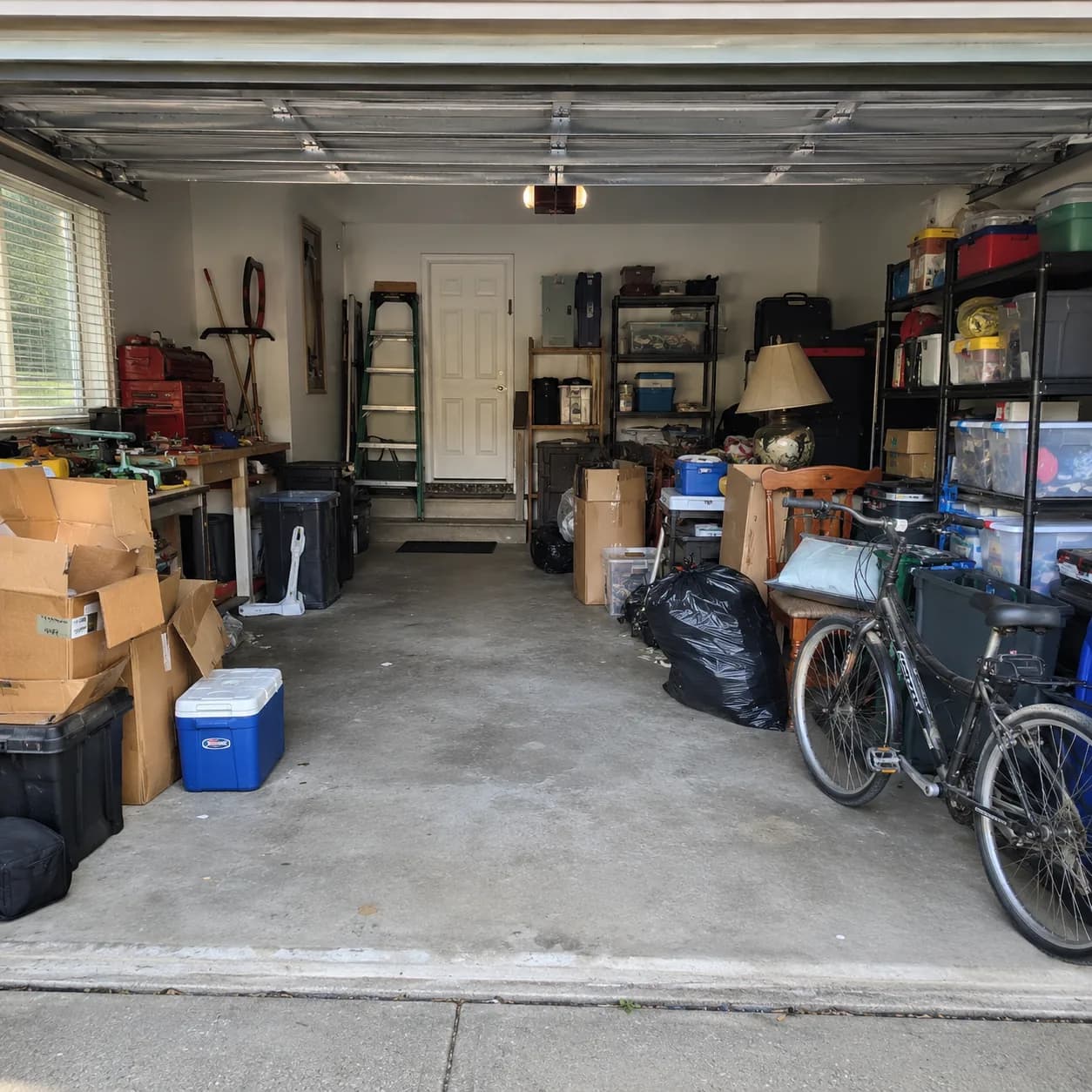
Garages accumulate differently from the rest of a house. Nothing is ever thrown away there; it is simply moved to the garage first, and then stays. The result after a decade is a space that cost real money to build and can no longer hold a car.
A garage cleanout is one of the highest-value jobs Junk Koala does, because the payoff is immediate and physical: a two-car garage that actually parks two cars. It is also one of the more involved jobs, because garages hold the widest mix of material in the house — furniture, appliances, lumber, yard tools, paint, sports equipment and thirty boxes nobody has opened.
Crews work through the space with you, keep the things you want kept, and clear the rest. The sorting matters as much as the hauling: metal, electronics, yard waste and donatable goods all have different destinations, and a garage load usually contains all four.
Who this is for
- Homeowners who want to park in the garage again
- Anyone who has inherited a previous owner's leftovers
- Households preparing for a move, a renovation or a listing
- Families clearing a parent's or relative's garage
- Anyone whose shelving, workbench or overhead storage is failing
- Property owners clearing a detached garage or shed before a sale
What's included
What comes out of a typical garage
Bulk and furniture
- Old furniture stored 'temporarily'
- Retired appliances and freezers
- Shelving units and workbenches
- Cabinets and storage systems
- Exercise equipment
- Broken patio furniture and grills
Equipment and materials
- Lawn mowers and yard equipment
- Bicycles, sports gear and toys
- Leftover lumber, trim and drywall
- Old tires and wheels
- Scrap metal and fencing
- Boxes, bins and loose clutter
Handled separately
- Paint, stain and solvents
- Gasoline, oil and antifreeze
- Propane tanks and fuel cans
- Pesticides and pool chemicals
- Car batteries
- Ammunition and flares
Our approach
How Junk Koala handles a garage cleanout
Walk it first and agree the scope
The crew walks the garage with you before anything moves, so the price reflects the actual volume rather than an estimate made from the driveway.
Keep pile stays put
Anything you are keeping gets set aside first. Crews do not make judgment calls about what matters — if you have not pointed at it, it stays.
Sorted as it is loaded
Metal, electronics, yard waste and donation-quality goods are separated during loading, because separating a mixed load afterwards is far harder than doing it once.
Hazardous materials flagged, not taken
Paint, fuel, propane and chemicals are set aside and identified for you, with a pointer to your local household hazardous waste program. They cannot legally travel on a junk truck.
Swept out at the end
The floor gets swept before the crew leaves, which is what makes the difference between an emptied garage and a finished one.
Cost & preparation
What moves the price, and how to get ready
What affects the price
- The volume of material, measured by how much of the truck it fills
- Dense materials such as concrete, brick, soil and tile, which are priced by weight
- Items with separate facility fees — refrigerant appliances, tires, televisions and mattresses
- Whether shelving, cabinets or overhead racks need dismantling
- How much sorting is needed on site versus a straightforward clear-out
- Local disposal and recycling rates
How to prepare
- Do a pass beforehand and mark the keep pile, or move it to one side. This is where most of the time is saved.
- Pull hazardous materials out first and set them somewhere obvious — paint, fuel, propane, chemicals and car batteries all need a household hazardous waste facility.
- Open boxes you have not opened in years before the crew arrives, not after the truck leaves.
- Make sure the driveway is clear so the truck can back close to the door.
- Photograph the garage and send it with a quote request — volume is very hard to describe in words and very easy to show.
FAQ
Garage Cleanouts questions
Do I need to sort everything before you arrive?
No, but separating what you are keeping speeds the job up considerably and can reduce the labor time. The crew will not throw out anything you have not agreed to.
Can you take paint and old gasoline?
No. Paint, solvents, fuel, propane, pesticides and automotive fluids are household hazardous waste and are prohibited on a junk removal truck. The crew will set them aside and point you to your local HHW collection program, which is usually free for residents.
How long does a garage cleanout take?
A single-car garage with a moderate amount of material is often a couple of hours; a packed two- or three-car garage can run most of a day. The variable is not usually volume — it is how much decision-making happens during the job.
Will you take the shelving and cabinets too?
Yes. Freestanding shelving, workbenches, wall cabinets and overhead racks are all removable, including dismantling them where they are fixed to the wall or ceiling.
What happens to things that are still usable?
Usable furniture, tools, sporting goods and household items are offered to local donation partners where they meet receiving standards. Metal goes to scrap, electronics to e-waste recycling, and yard waste to green waste facilities where available.
Where we collect
Garage Cleanouts across our open markets
- Dallas, TX
- Fort Worth, TX
- Houston, TX
- Austin, TX
- Phoenix, AZ
- Las Vegas, NV
- Atlanta, GA
- Charlotte, NC
- Nashville, TN
- Orlando, FL
- Tampa, FL
Not listed? Check your ZIP code — it is the answer at your address, whatever the city line says.
Related
Other services people book with this
Residential Junk Removal
Single items through whole-home cleanouts, handled by a local crew that does the carrying.
View serviceEstate Cleanouts
Whole-property clearing handled carefully, on the timeline the estate needs.
View serviceYard Waste Removal
Brush, branches, storm debris and old landscaping cleared and composted where possible.
View serviceAppliance Removal
Washers, dryers, ranges and dishwashers hauled out and recycled.
View service
Guides on this
Get started
Need garage cleanouts?
Book a pickup or send us the details and we'll come back with a price.
Up to $20 off when you book online — no code needed. It comes off any job priced above your market’s minimum charge; the exact amount is shown before you pay.