
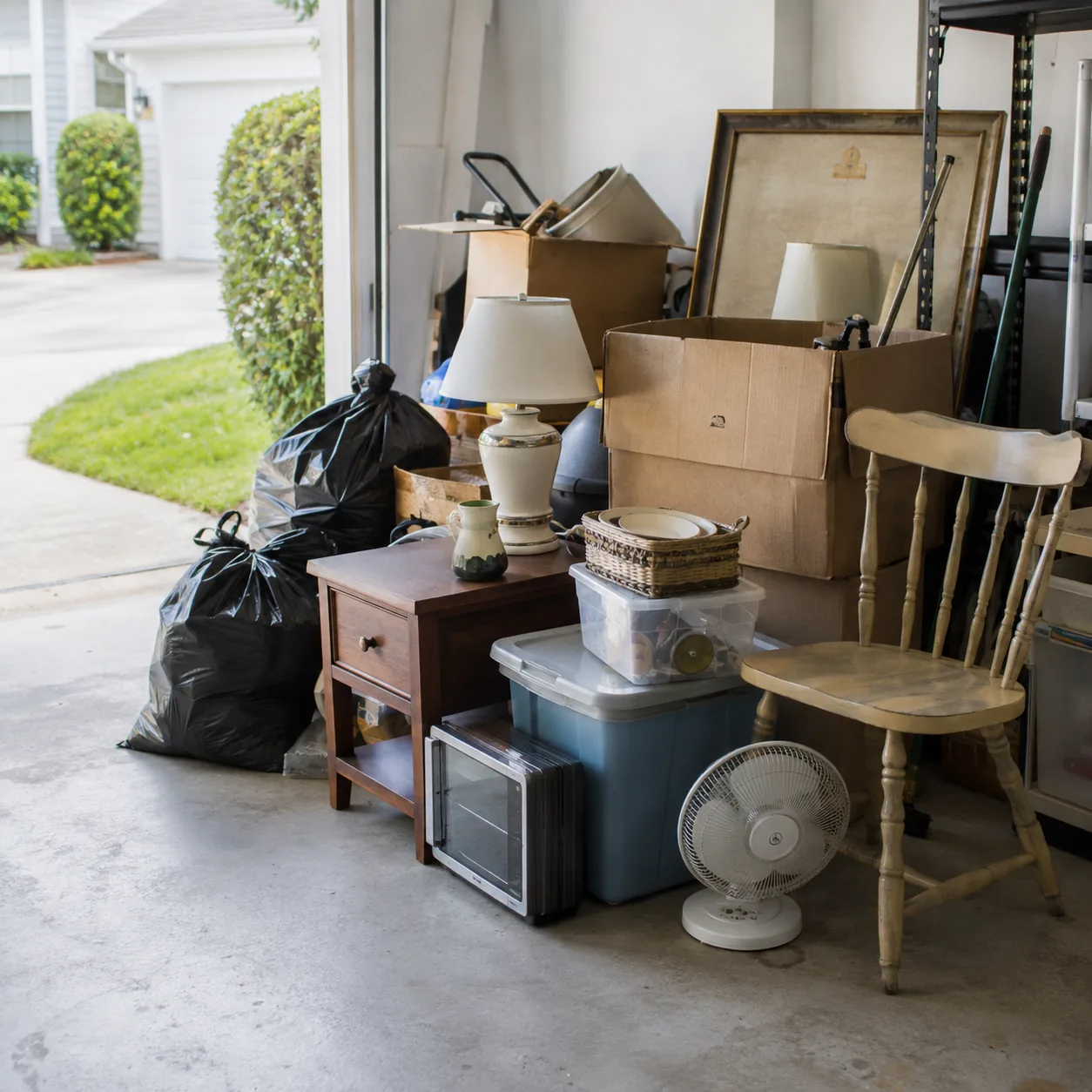
An estate cleanout usually follows a death, a move into care, or a decision nobody wanted to make, and it often runs to a deadline set by a closing date, a probate schedule or a landlord.
The work divides into four piles: keep, share with family, sell or donate, and dispose. Only the first three need the family's judgment. The checklist below is built around protecting those decisions, so that nothing that matters ends up in the fourth pile by accident.
1. Secure the important papers and valuables first
Before anything is moved, find and set aside the things that are hard or impossible to replace. Do this as a separate pass, before any sorting starts.
- Wills, deeds, titles, insurance policies and financial statements
- Passports, birth and marriage certificates, and military records
- Keys, jewelry, cash, collectibles and anything that may need valuing
- Photographs, letters, home videos and family records
- Mail — keep collecting it, because bills and accounts surface for months
2. Check who has to agree, and the deadline
If there is an executor or personal representative, confirm what they need to approve before anything leaves the house, and whether anything has to be inventoried or valued for the estate first.
Then pin down the real deadline — a closing, a lease end, a care-home move — and work backwards from it. Knowing whether you have two days or two months changes every later step.
3. Let family choose keepsakes before anything else goes
Give relatives a fixed window to walk through and claim what matters to them, and agree a simple way to settle two people wanting the same thing. Label claimed items clearly so nobody packs or removes them by mistake.
Remember the places people forget: the attic, crawl spaces, the basement, a detached garage, sheds and any rented storage unit.
4. Sell, then donate
Furniture, tools and collectibles in good condition can be sold privately or through an estate sale company. Selling takes the longest, so start it early.
Donate what does not sell. Charities usually want items in good, clean condition and will often collect larger furniture if you book ahead.
5. Clear what is left
What remains after keeping, sharing, selling and donating is the part a junk removal crew handles: furniture, appliances, clothing, kitchenware, papers and everything else, from every room, including the attic, garage and basement.
A careful crew works room by room rather than clearing wholesale, and sets aside anything that looks personal or valuable — documents, photographs, an envelope in a drawer — instead of loading it. Ask for that explicitly when you book.
6. Leave the house ready for what comes next
Once it is empty, walk every room, closet and cupboard one last time. Then arrange the clean, the repairs or the listing photos the next step needs.
Leave the utilities on until the clearing and cleaning are finished. The crew and the cleaners will need lights, and often water.