
Moving is the one time when the cost of keeping something becomes explicit. Moving companies price by weight or by volume, which means every box that goes on the truck has a number attached to it — including the ones full of things you will not unpack at the other end.
That makes a pre-move declutter the highest-return hour of the whole process. It is also the one most people skip, because it happens during the busiest fortnight of the year.
Use the replacement-cost test
The useful question is not 'do I still want this?' — almost everything passes that test when you are holding it. The useful question is: if this were not here, would I pay to replace it?
It reframes the decision around future value rather than past attachment, and it maps directly onto what a move actually costs. A bookshelf that would cost less to replace than to transport across three states has answered the question itself.
This works badly for anything sentimental, and that is fine — sentimental items are not the problem. The problem is the third set of dining chairs and the exercise bike.
Declutter before the estimate, not after
Moving quotes are based on a survey of what is in the house. If you declutter after the estimate, you have already been quoted for the things you are no longer taking, and renegotiating is harder than it sounds.
Clearing first also makes the estimate more accurate in the other direction, which matters — an underestimated move is how people end up with a second truck on the day.
Attack the categories that cost the most to move
Not all clutter is equal. Weight and volume are what you are paying for, so the return is concentrated in a few places.
- Books — extraordinarily dense; a few boxes weigh more than a sofa
- Furniture you already dislike — the largest volume items in the house
- Exercise equipment — heavy, bulky, and frequently unused after the move
- Old appliances — heavy and often not compatible with the new place
- Paint, chemicals and fuel — movers will not transport them at all
- Anything stored in a garage, attic or basement 'for now'
Know what movers won't take
Every moving company maintains a non-allowables list, and it catches people out on the day. Flammables, corrosives, propane, fuel, paint, aerosols, ammunition and perishable food are all typically refused, regardless of how carefully packed they are.
None of that can go on a junk removal truck either — it is household hazardous waste and needs your county's HHW program. Deal with it early rather than discovering it on the morning of the move, when there is no time left to.
Sequence the clear-out around the actual deadline
The date that matters is rarely the move date. It is the closing, the final inspection, or the day the keys change hands, and the clear-out has to land before it with room to spare.
A common sequencing error is booking a junk removal for the same morning as the movers. Two crews and two trucks competing for one driveway goes badly. Book the clear-out for the day before the movers, and any post-move sweep for after they have gone.
Check the attic, the crawl space and the back of every closet
This is where the surprises live, and they surface on the last day without exception. Previous owners' leftovers, holiday decorations, the box of cables, the spare tiles from a renovation two owners ago.
Walk those spaces a fortnight before the move, not the night before. It is the difference between an extra item on a scheduled removal and a frantic phone call on closing morning.
Selling, donating and hauling are different timelines
If something has genuine resale value, sell it first — that process takes weeks, not days, and it does not compress. Donation drop-offs need to fit around opening hours and receiving standards, and organisations decline more than people expect, particularly upholstered furniture.
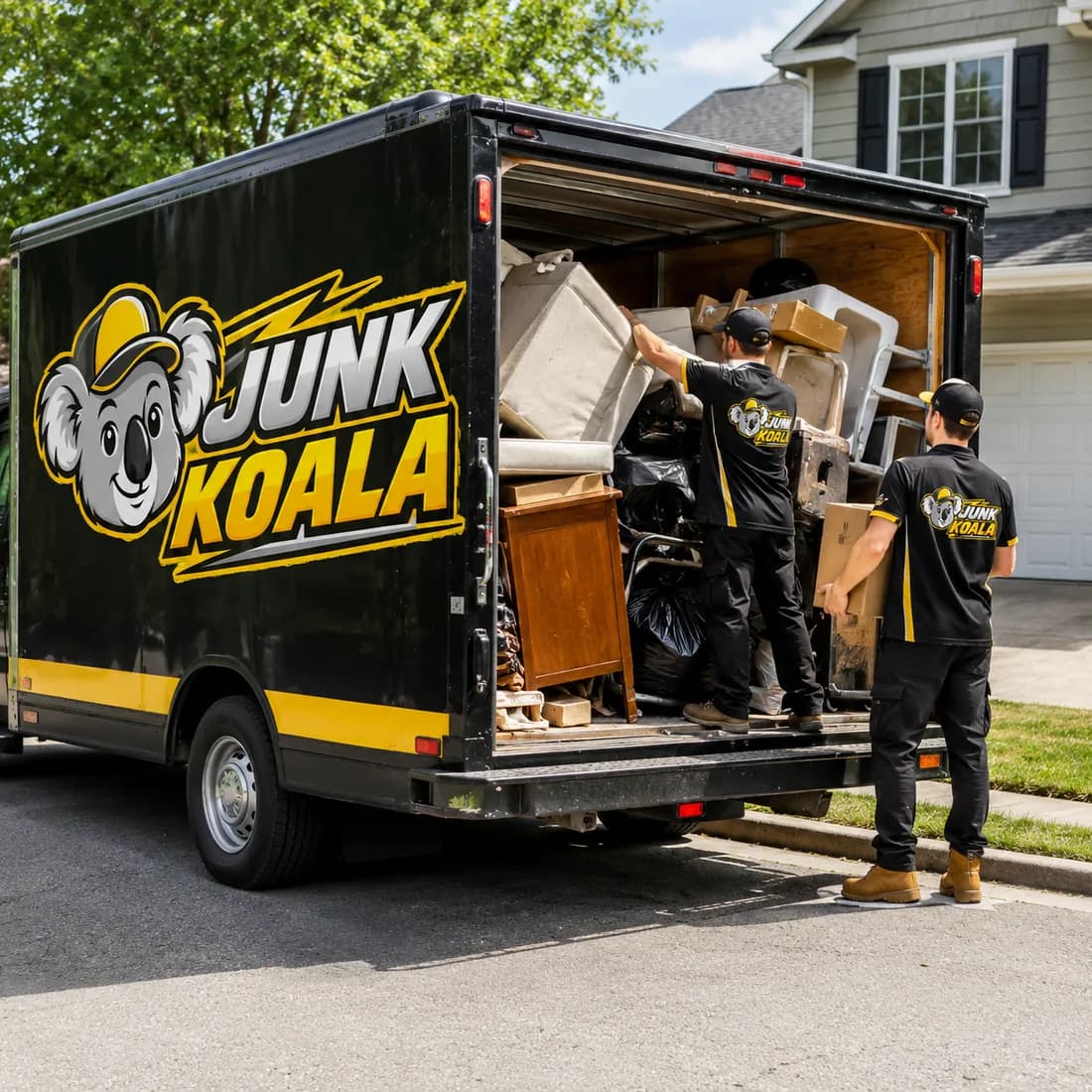
Junk removal is the last step, not the first. It is what handles the residue after selling and donating have taken what they will, and it is the only one of the three that can be scheduled for a specific day.