
A mattress is one of the few household items with no easy disposal route. It will not fit in most vehicles, many municipalities refuse it at the curb, donation centres almost universally decline used ones, and a handful of states have banned it from landfill outright.
The result is a mattress leaning against a garage wall for a year. Here is what your actual options are, roughly in the order worth trying.
First: check whether your retailer will take it
If you are buying a replacement, ask about haul-away before you buy rather than after. Many mattress retailers offer removal of the old set with a delivery, sometimes free and sometimes for a modest fee.
This is comfortably the cheapest route when it is available, because the truck is already coming to your house. It is also the easiest thing to miss — it is frequently an unticked box at checkout rather than something offered.
Check whether your city collects mattresses
Some municipalities collect mattresses through a bulk waste program, usually with conditions: an appointment, a limited number of items, a specific collection window, and often a requirement that the mattress be bagged in plastic.
The bagging requirement is not bureaucratic fussiness. It is largely about bed bug containment, and in some cities an unbagged mattress will simply be left at the curb.
Where this works, it is inexpensive. The limitation is timing — bulk collection often runs monthly or by appointment weeks out, which is no help if the new bed arrives Thursday.
Look for a mattress recycler
Mattresses are roughly 75% recyclable by weight. Steel springs go to metal recovery, foam is reprocessed into carpet underlay, fibre becomes industrial filter material, and the wooden frame can be chipped as mulch or biomass.
A handful of states run statewide mattress recycling programs funded by a fee collected at the point of sale, and in those states drop-off is often free at participating sites. Elsewhere, coverage depends entirely on whether a private recycler operates within range of your metro.
This is genuinely the best outcome for the material, and it is worth ten minutes of searching for 'mattress recycling' plus your city before defaulting to disposal.
Why donation usually isn't an option
People are often surprised that charities decline mattresses. It is not squeamishness — it is regulation and liability. Many states restrict the resale of used bedding outright, and organisations that can accept it apply strict standards on staining, odour, structural condition and any history of pests.
If a mattress is close to new and genuinely unmarked, it is worth calling a local shelter or reuse organisation to ask. Expect the answer to be no, and do not build your plan around it.
When removal is the practical answer
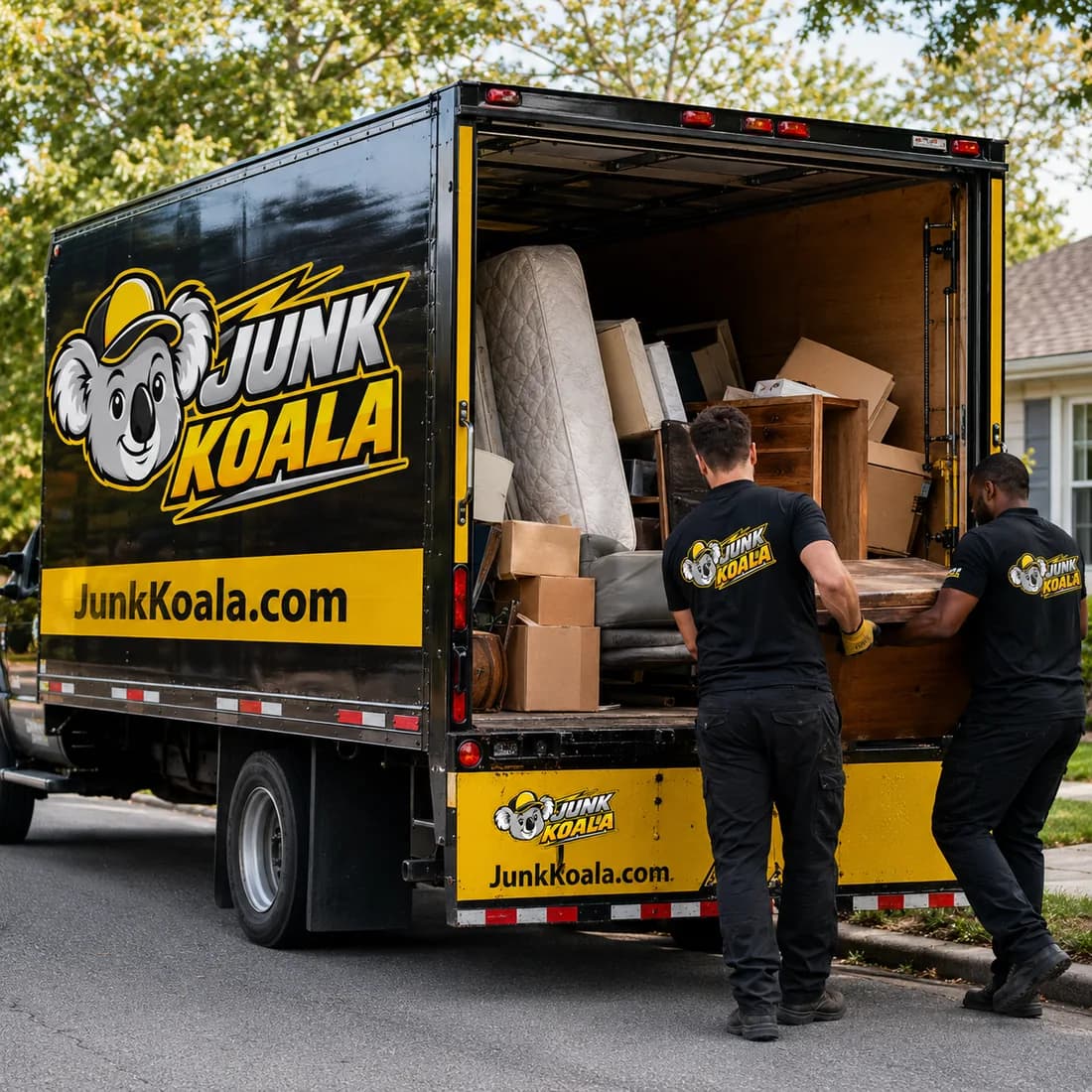
Junk removal is the route when the other options have run out or the timing does not work — which, for most people replacing a bed on a specific day, is most of the time.
The practical advantages are that the mattress is taken from the bedroom rather than the curb, the bed frame and headboard go in the same visit, and it happens on a day you choose rather than whenever the bulk collection cycle comes round.
Expect a per-unit fee. Almost every disposal and recycling facility charges per mattress rather than by volume, and that cost is passed through — it is the same reason municipalities exclude them from ordinary collection.
- A mattress and a box spring are two separate units, and are charged as two
- Removal is meaningfully cheaper per item when it is part of a larger load
- Where a mattress recycler serves the market, that is where the mattress goes
- Bed frames, headboards and adjustable bases are removed in the same visit
If there are bed bugs, say so
Disclose it when you book, every time. It is not a reason a job cannot be done, but it changes how it has to be done: the mattress needs to be sealed before it moves through hallways, and some facilities require it wrapped before they will accept it.
A crew that arrives unprepared may not be able to complete the job that day. A crew that is told in advance turns up with the right materials and it becomes routine.